Trivane
Process Overview

Measured Steps. Written Record.

Every Trivane consultation follows a five-stage sequence: intake documentation, food-choice evaluation, calibration, seasonal plan composition, and structured follow-up. Each stage produces a written record. No stage is skipped.

Consultation stages
Five-stage protocol
Documentation standard
Written intake record per session, revision-numbered
Verification
Third-party ingredient batch verification on all supplements
02 — Five-Stage Protocol

How a consultation unfolds, stage by stage.

01
Intake Documentation

The 7-Day Food Diary

Before the first session, each client completes a 7-day food diary using the Trivane intake template. The template maps meals by time of day, food group, preparation method, portion estimate, and accompanying fluid intake. Vegetables and fruits are recorded separately from processed foods. The diary is returned completed before the session begins.

This document is the foundation of all subsequent recommendations. The nutritionist reviews it prior to the session and marks patterns: missing food groups, over-reliance on particular categories, gaps in vegetable and fruit variety, meal timing relative to physical activity. The diary becomes the first entry in the client's consultation archive.

7-day window 12 food-group categories Pre-session submission
02
Food-Choice Evaluation

Reading the Pattern, Not the Plate

The first consultation session — approximately 60 minutes — is devoted entirely to reviewing the diary together. The nutritionist does not bring a prepared plan to this session. Instead, the conversation moves through the diary entry by entry, identifying what shapes the client's current food choices: routine, convenience, budget, habit, cultural preference, or activity level.

The evaluation produces a written summary: which food categories are well-represented, which are absent, and how the overall dietary composition relates to the client's stated goals regarding weight, energy, and active lifestyle. This summary is signed and dated — it is revision 01 of the client's Trivane record.

60-minute session Written evaluation summary Revision 01 issued
03
Weight & Activity Calibration

Aligning Food with Movement

The calibration session maps the relationship between the client's current dietary composition and their activity level. For adults with a sport routine — running, cycling, gym, team sport — the session assesses whether food intake supports energy output, recovery timing, and hydration. For sedentary adults, it maps the gap between current intake and a diet suitable for moderate active-lifestyle goals.

Calibration does not involve extreme restriction. The output is a series of adjustments to existing habits: adding one vegetable category per weekday lunch, introducing a fruit portion in the mid-morning, adjusting meal timing around exercise. Small, documented shifts rather than wholesale replacement.

Activity-diet mapping Incremental adjustments No extreme restriction
04
Seasonal Plan Composition

A Plan Built from What Is Available

The 28-day seasonal eating plan is composed in the second session, using the calibration notes and the client's diary as source material. Plans are structured around Romanian seasonal produce: tomatoes, peppers, and courgette in summer; root vegetables, squash, and preserved greens in winter; brassicas and alliums in the transition months of spring and autumn.

The plan is written as a framework, not a rigid schedule. It identifies which food groups should appear at which meal, suggests preparation methods that suit the client's kitchen routine, and marks optional supplement windows where food-supplement use might complement dietary intake. The plan document carries a date, a revision number, and the client's intake profile summary on its cover page.

Plans are revised four times per year to reflect the seasonal cycle. Revision notes are logged against the original plan document, creating a readable history of how each client's dietary habits have shifted over time.

28-day framework Seasonal produce calendar 4 revisions per year Revision-numbered document
05
Structured Follow-Up

The Value Is in the Return Visit

Follow-up sessions are scheduled at week four of the initial plan. At this session, the client brings a new 7-day diary completed under the plan's guidance. The nutritionist compares the new diary with the original, notes which adjustments took hold and which did not, and revises the plan document accordingly. The revised plan is issued as revision 02.

Ongoing clients in the Dietary Guidance Programme attend one follow-up per month. Each session produces a progress note added to the archive. The archive — a folder of dated, revision-numbered documents — is the most concrete record of how a person's food habits change over time through sustained, patient guidance.

Week-4 check-in Monthly follow-up (ongoing) Cumulative archive
03 — Quality Standards

How supplement ingredients are sourced and verified.

Active ingredients in Trivane nutritional supplements are sourced from documented suppliers, with each batch accompanied by a certificate of composition. Sourcing prioritises suppliers whose facilities maintain food-grade processing standards. The ingredient profile for each supplement is documented in a lot record held in the practice archive.

Ingredient profiles in Trivane supplements are selected based on published nutritional research and undergo independent batch verification for quality and labelling accuracy. Verification reports are filed per production batch and available upon written request to the practice.

Trivane products are nutritional food-supplements registered with the applicable local regulatory authority under food-supplement classification. Products meet compositional and labelling requirements for nutritional supplement categories.
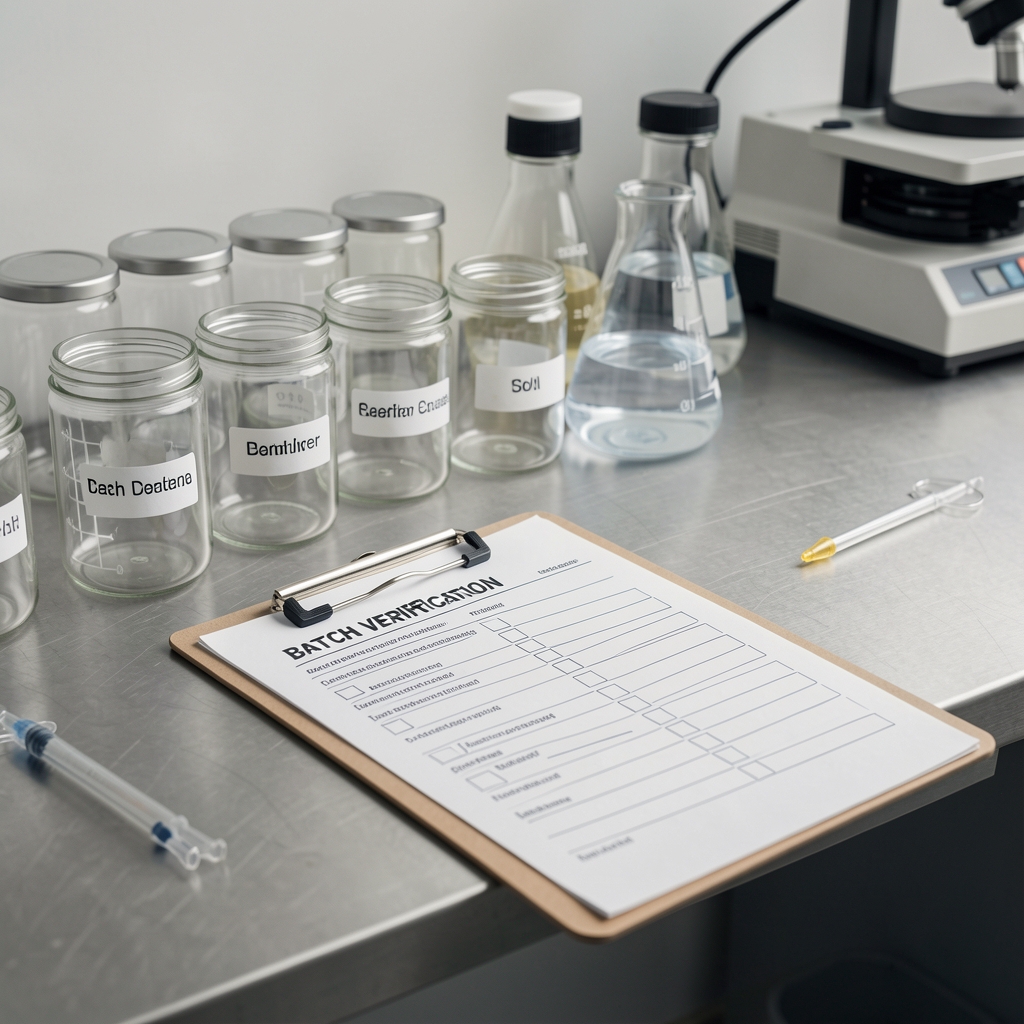

Quality-control bench with labelled glass containers, a clipboard with a batch verification checklist and controlled studio lighting
Sourcing
Documented suppliers with food-grade processing facilities
Verification
Independent batch verification per lot, certificate of composition
Archive
Lot records held in practice archive, available upon request
Classification
Registered food-supplement category, compositional compliance
04 — Sourcing Overview

What traceability means at Trivane.

Chain-of-Custody

Each ingredient batch is traceable from the source supplier to the finished supplement unit. The chain-of-custody document is filed alongside the certificate of composition for every production lot.

Regional Sourcing

Where the ingredient supply allows, sourcing is oriented toward European-region suppliers. Regional sourcing shortens the cold-chain, reduces transit time, and makes the origin-map of each ingredient more precise and auditable.

Lot Record Format

Each lot record carries: supplier name and facility address, ingredient common name and INCI designation, batch production date, independent verification report reference, and the Trivane archive entry number. Records are retained for a minimum of five years.

Open notebook with handwritten consultation notes, a pen resting across the page and a small potted herb on the desk beside it
Wooden produce crate holding fresh root vegetables, dark greens and a seasonal variety of fruits photographed in natural daylight
Glass containers with dry botanicals and seeds arranged on a clean white lab bench with a measurement scale in the background
05 — On Documentation

Why the written record is the practice.

A consultation without documentation is a conversation. Useful in the moment, but unreliable as the basis for a plan that spans four seasons and multiple revision cycles. The Trivane methodology places the written record at the centre of the practice because it is the only way to distinguish real change from the impression of change.

When a client returns for a follow-up in month three, the nutritionist does not rely on memory to assess progress. The archive holds the original intake summary, the calibration notes, the first seasonal plan, and the week-four revision. Together, those documents describe exactly where that person's food habits were and where they are now. The revision notes themselves carry the date, the name of the nutritionist, and a one-line summary of the principal change observed.

This approach is slower than a one-session audit. It is also more honest. Dietary habits are formed over years; revising them requires months of patient observation, not a single session of corrective advice. The five-stage protocol exists to create enough documented contact to make that patience productive.

"Three seasons of records tell more about a person's relationship with food than any single intake review."
Trivane Practice Notes — Revision 08-A, archived January 2024
06 — Methodology Questions

Practical questions about how the process works.

Yes. The 7-day diary is the working document for the first session. The nutritionist reviews it before you arrive. Without a completed diary, the evaluation cannot proceed on schedule, and the session would need to be rescheduled to a date when it has been completed.
From diary submission to plan delivery takes approximately two weeks. The first session (intake review) occurs in week one. The calibration note is issued within three days of that session. The seasonal plan is delivered at the second session in week two. The week-four follow-up closes the initial sequence.
No. Each plan is composed from that client's intake record and calibration notes. Two clients beginning the practice in the same week may receive plans with the same seasonal produce framework but entirely different meal structures, timing recommendations, and supplement notes. There is no generic template behind the plan.
Trivane nutritional food-supplements are designed to complement a balanced daily diet — not to replace the variety that comes from vegetables, fruits, and whole foods. Where the seasonal plan identifies a consistent gap in a particular nutrient category, a supplement may be noted in the plan as an optional complement. We recommend speaking with a qualified wellness or nutrition professional before introducing any supplement, particularly if you have specific dietary requirements.
Yes. Clients may request copies of any document in their archive at any time. Documents are available as PDF copies. The archive is held in accordance with the Trivane privacy policy and applicable Romanian data-protection requirements. Requests can be submitted by email to [email protected] or in person at the practice.
Each batch of ingredients used in Trivane supplements undergoes independent batch verification. The verification covers active ingredient concentration per lot and labelling accuracy. Certificates of composition are held in the practice archive. Sourcing is from documented suppliers whose facilities maintain food-grade processing standards.

The process starts with the diary.

Schedule a first consultation and receive the Trivane intake template. Complete it over seven days and bring it to your first session. That document is where the work begins.